Why it's cool
obsaased.io used to be a Notion page. This was the jump to a real site on my own domain, built locally with an AI coding tool by someone who had mostly used Replit.
A personal site built locally with AI to turn scattered side projects into a living public archive.
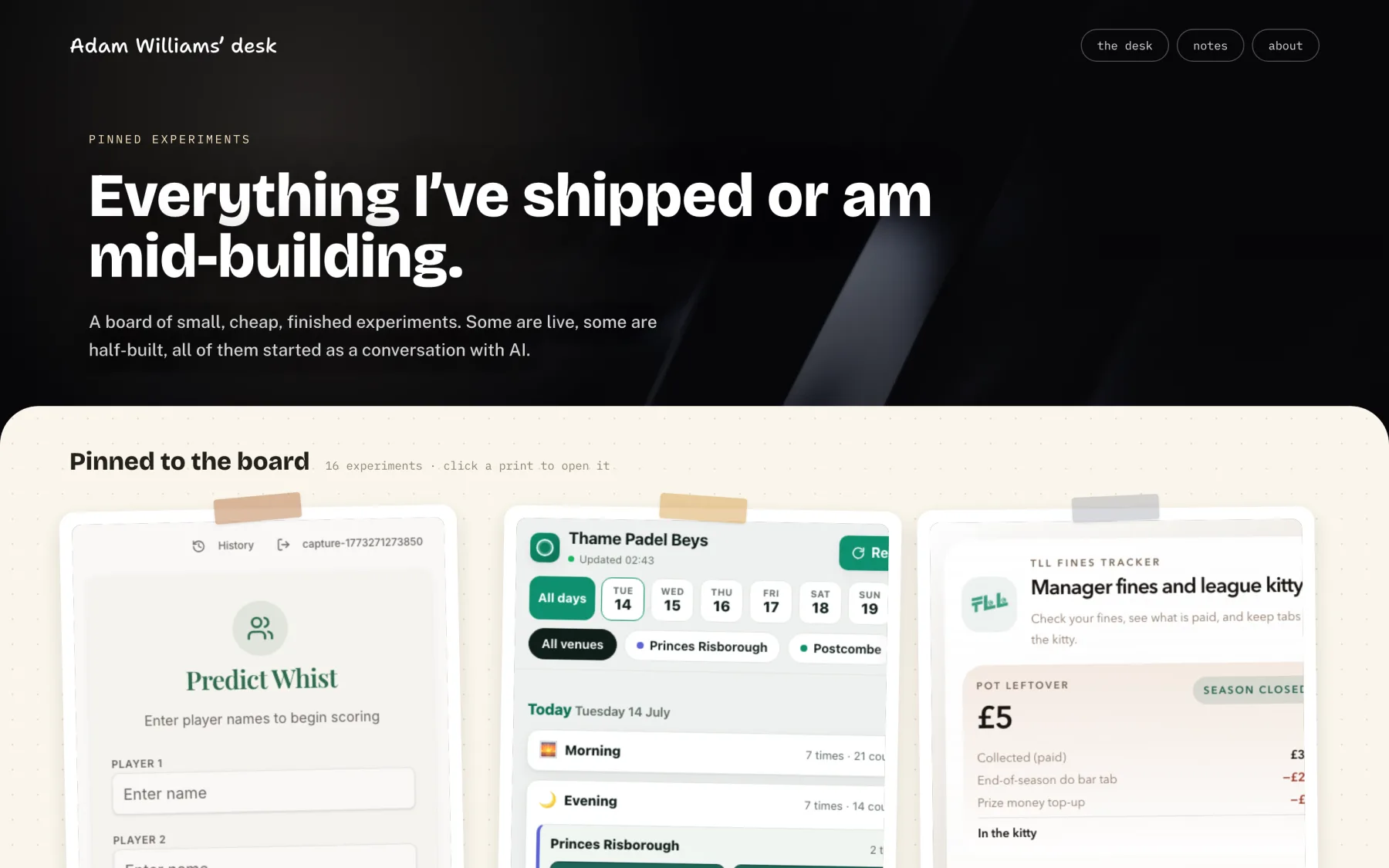
obsaased.io used to be a Notion page. This was the jump to a real site on my own domain, built locally with an AI coding tool by someone who had mostly used Replit.
Killing the WYSIWYG editor the first version shipped with. It was clunky, and a clear file structure plus an agent that writes and publishes turned out much better.
Google Antigravity for the first build, Vercel for hosting, and Namecheap DNS records handed back by the agent.
From "domain pointed at Notion" to a custom site with a real publishing path, as a novice, fast enough that the bottleneck became writing rather than setup.
obsaased.io used to point at a Notion page. Honest, but limiting — it made every project I built feel temporary, trapped in a chat, a repo, or a half-finished note instead of somewhere real. I wanted a proper home for the work, in public.
The question was half about the site and half about the workflow behind it: could a novice local builder go from a vague brief to a real custom site on their own domain, using an AI coding tool, without getting stuck in setup?
This was my first serious local AI-assisted build after most of my earlier vibe coding happened in Replit. I gave Google Antigravity a loose prompt — build a personal portfolio site, lean into design, pull a few strong 2026 portfolio references, make it personal — and let it run. Creatively it wasn’t there yet. Functionally, it did the job fast.
The homepage wasn’t the point. The system around it was: file-based content, a deployment path the AI could walk end to end, the Vercel hosting flow handled automatically, then the exact Namecheap DNS records handed back to point the domain correctly. There was a WYSIWYG editor in that first version. It was clunky, and it’s gone now — replaced by a standard experiment structure and an AI workflow that writes and publishes directly.
The site is alive. Not precious, which is what makes it useful — I can redesign it, restructure it, publish something new, and treat it as a playground instead of protecting some polished brand artefact.
The real surprise was how far a novice gets with a decent prompt in a local environment. The result was basic, but it moved the site from “domain pointed at Notion” to “custom site with real publishing infrastructure” fast enough that the bottleneck is now editorial discipline, not technical setup. That’s a much better problem to have, and it’s the one this pass is solving.
React, Vite, local markdown content, local admin tooling, Vercel, Namecheap, Google Antigravity